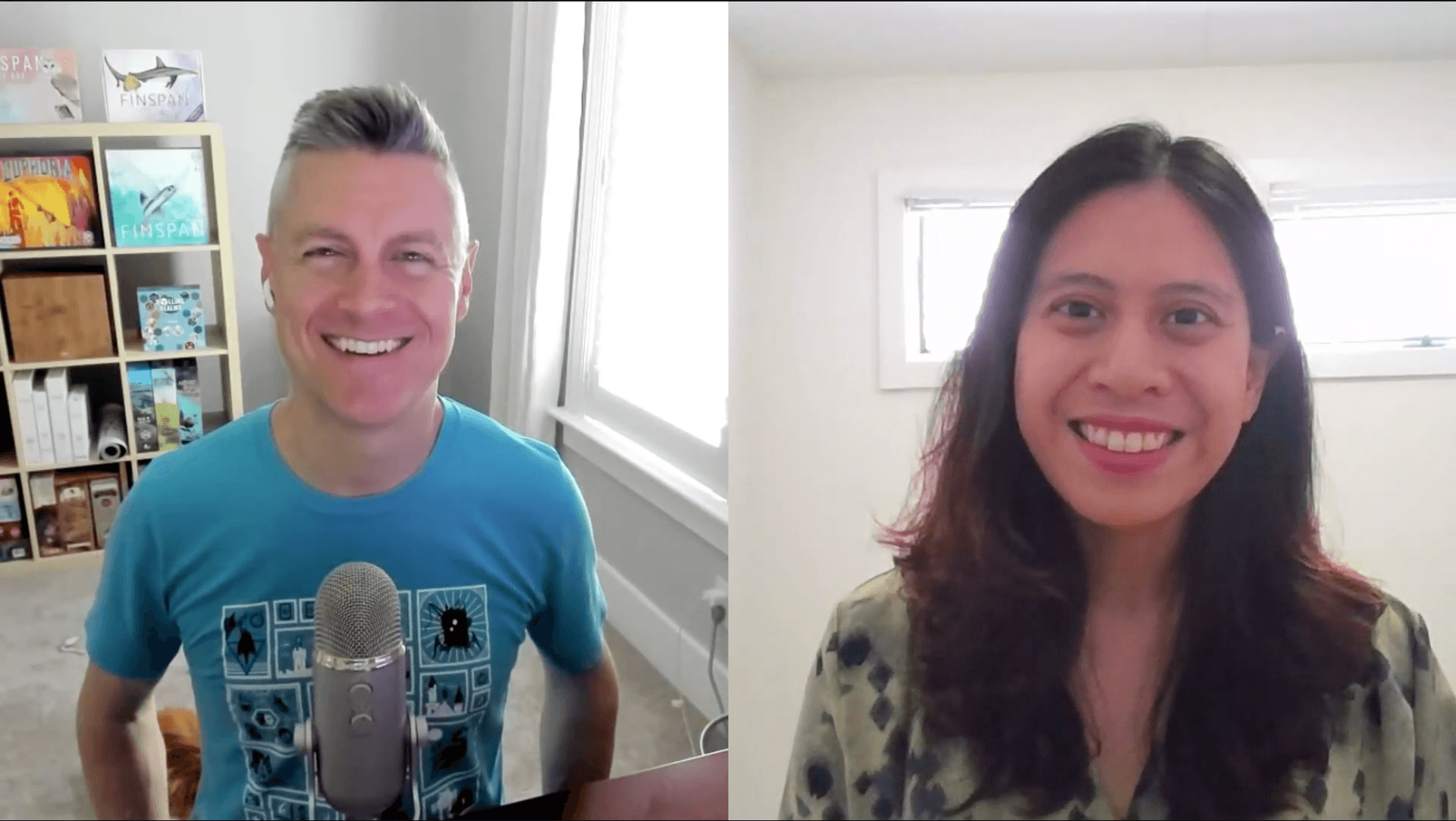
From Math Teacher to Two Million Copies: Eric Olsen on Your Turn Season 2
The designer of Flip 7 talks to Everjoy Global CEO Ionah Nguyen about the high school card game that inspired a global hit, why he chose to license instead of self-publish, and why "mass market" shouldn't be a dirty word.
Five years ago, Eric Olsen had never designed a board game. He was teaching high school math and didn't even know the board game industry existed.
Today, Flip 7 has sold over two million copies in nineteen languages, earned a Spiel des Jahres nomination, and won the Swiss Gamers Award. Eric has retired from teaching and now designs and publishes games full time.
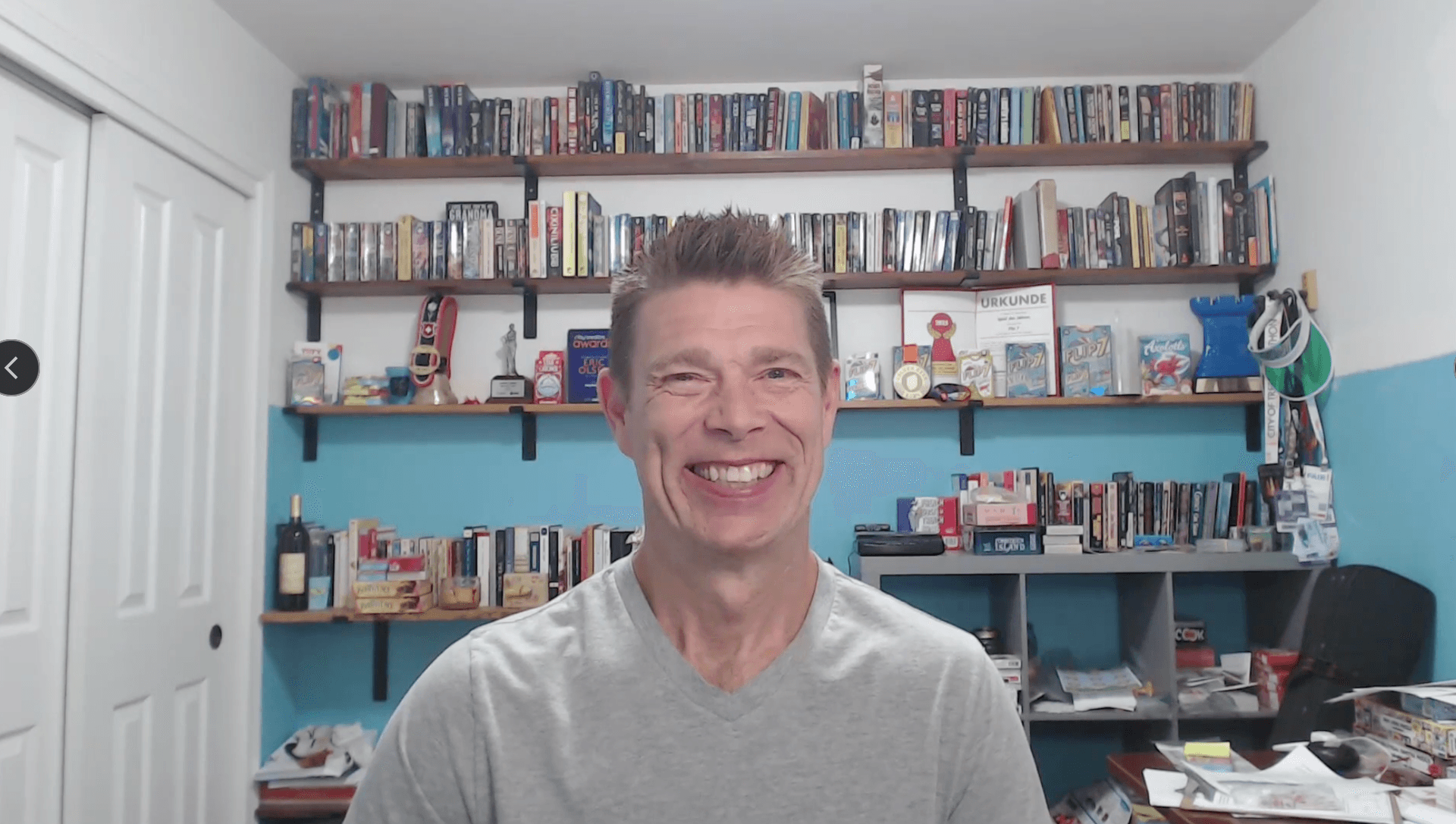
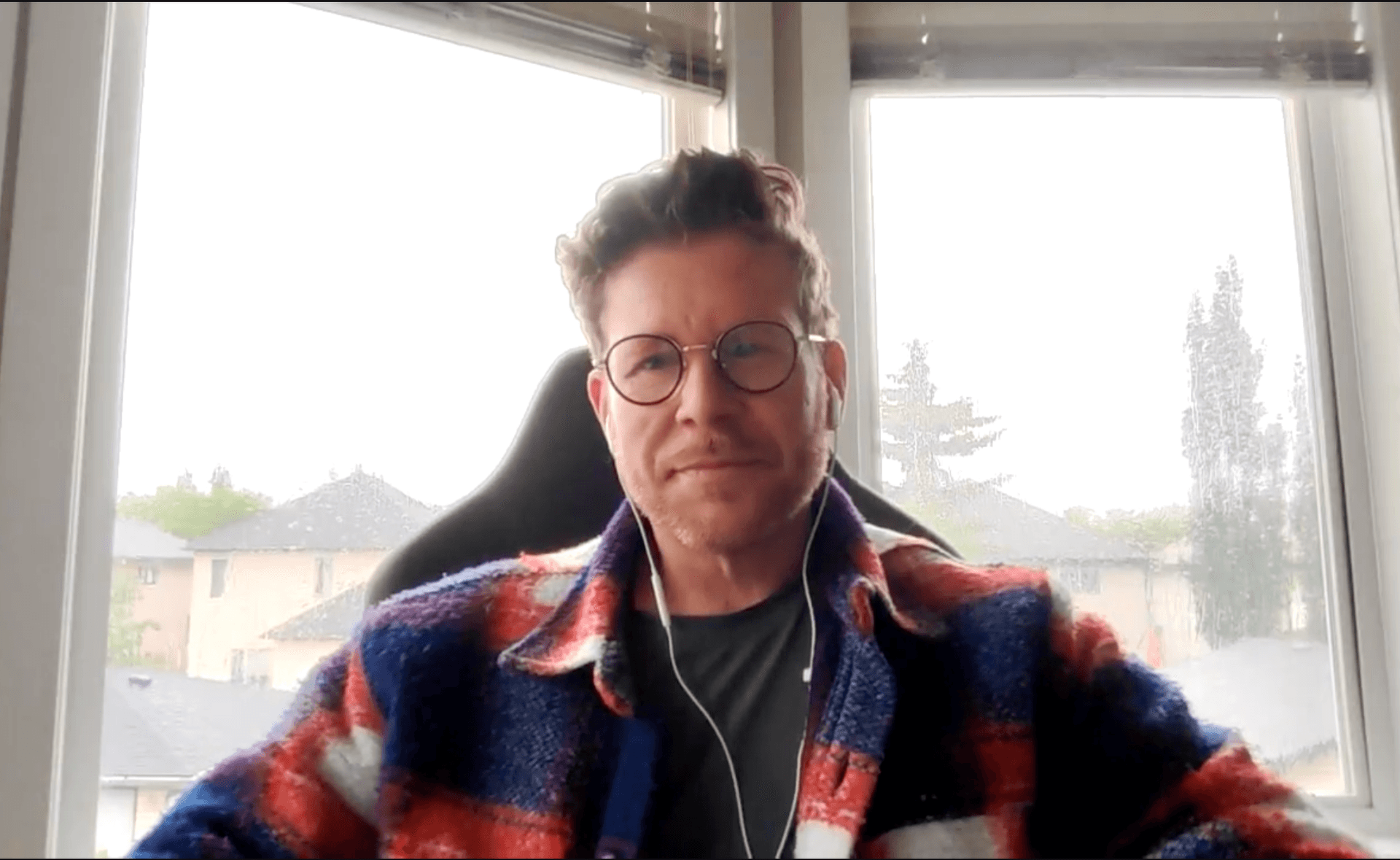
In the newest episode of Your Turn — Everjoy Global's podcast for board game creators — host Ionah Nguyen speaks with Eric Olsen, designer of Flip 7 and co-founder of Messy Table Games, about one of the fastest rises the industry has seen in years.
It started at a kitchen table during COVID
Eric had been playing games his whole life, like most designers. But he had never thought about making one.
That changed during COVID, sitting around the table with his kids, when he came up with an idea for a game called Glyphics - a kind of Pictionary played with physical pieces instead of drawing. It took about a year to develop, and it introduced him to an industry he hadn't known was there.
Flip 7 was his second game.
Once he had designed one, something shifted. More ideas started coming. A friend suggested he start a game company. Eric hesitated - it sounded like a lot - but in early 2023, he and his partner Jeff founded Messy Table Games, right around the same time he licensed Flip 7 to The OP.
He signed the agreement in October 2023. Flip 7 didn't launch until summer 2024. It has been less than two years since.
The game is thirty years older than you think
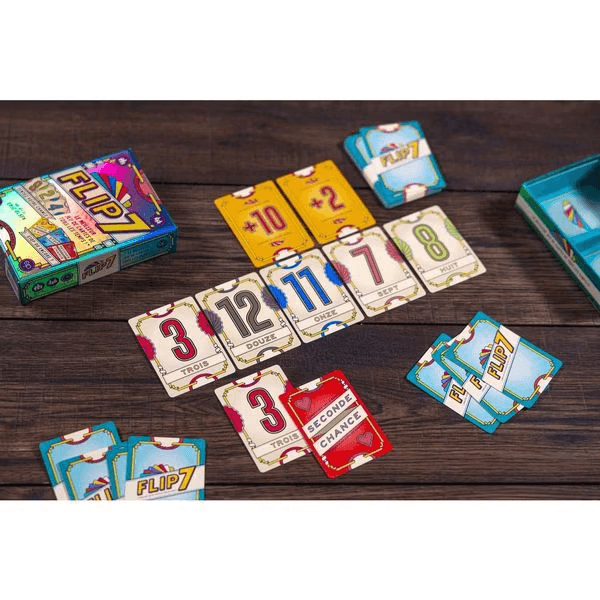
People today compare Flip 7 to blackjack, you go around the table saying hit or stay. But that isn't where it came from.
The real origin is more than thirty years old, back when Eric was in high school playing poker with friends every Friday and Saturday night. One of those friends, Rod, invented a variant of seven-card stud: instead of chasing the best poker hand, players simply tried to score the most points. And crucially — if you drew a pair, those cards dropped out.
That single rule created the tension. If you were ahead, everyone else stayed in hoping you'd bust.
Three decades later, Eric came back to it. He couldn't find a satisfying way to include betting, so he made a harder decision instead: if you get a pair, you're out. That was the first major change.
The second was realising nobody gets excited about small numbers. In the earliest version, the deck had as many 2s as 10s. He gradually reweighted it until he landed on the structure players know now — one 1, two 2s, three 3s, and so on. Only then did the action cards come in.
The whole process took about a year.
The hardest part of making something simple
Flip 7 looks effortless. Eric is direct about how much work that took.
The two biggest design problems were what happens when you draw a pair, and getting the card balance right. After that came the smaller decisions that most players never think about: should the deck run 1–10, 1–12, 1–15? Which action cards stay?
His original deck had a Steal card - a zero he could hand to any player to take a card of his choosing. He liked it, and was a little surprised when it was cut. He also had Freeze and Flip Three printed on a single dual card, where the target player chose which half applied to them. The OP split them into two separate cards because it was easier to learn and easier to play.
He didn't love that change at first. He now thinks it was the right call, and that watching those decisions play out taught him a lot about accessibility.
He had played the game hundreds of times before it reached The OP. Then The OP played it hundreds more, coming back with questions - did you try this? Sometimes yes, and it didn't work. Sometimes no, and they would each test it on their own side.
The game looks very simple. Making it feel smooth enough that people keep coming back is what took the time.
License or self-publish? He ran the numbers
Eric calls this the question aspiring designers ask him constantly - on LinkedIn, in Facebook design groups, everywhere.
Most designers, he says, would rather license. They want to design games, not run businesses - not websites, manufacturing, shipping, Amazon, or the financial risk of funding a 5,000-copy print run.
But he's honest about the trade-off. Typical US licensing rates run four to six percent, and a new designer might see four percent with a small advance. He personally knows designers who have signed over fifty games and still hold regular jobs, because the rates are small and some signed games never get published at all. With over 5,000 new games released last year, not all of them will make it.
So he did the math - which, as he notes, is fitting. As a publisher he might make two or three dollars a game versus twenty-five or thirty cents licensed. That means selling 5,000 copies himself is roughly equivalent to a publisher selling 50,000. That calculation is why he said yes to starting Messy Table Games.
And here's the part most people don't know: Eric was originally going to self-publish Flip 7. It was going to be the first Messy Table game, and they had already started down that road. Choosing The OP instead was a genuinely difficult decision. What tipped it was marketing reach -The OP already had games in the top twenty, and Eric realised that if Flip 7 succeeded, that success could help Messy Table Games grow.
How The OP found it - through an agent
Eric's path to a publisher wasn't the usual one.
Through his first game, he was introduced to GPI, a Massachusetts manufacturer that produced Bananagrams among other titles. They offered to connect him with publishers, and he admits he didn't realise at the time what a generous offer that was. When his game was finished, they proposed something better: including it in their own portfolio and pitching it for him.
Board game agents exist, Eric explains, though he's only met one. A manufacturer is in a uniquely strong position to be one, because they already know publishers - they are literally making those publishers' games.
The agent, David Blanchard, took Flip 7 to Mojo Pitch in England and showed it to more than twenty-five companies. That's where The OP first saw it.
The full-circle ending: David now works at The OP as head of family and party games. He was hired before they acquired Flip 7 - so he ended up running the game he had personally pitched. Eric calls it a one-in-a-million way for things to work out.
What's next at Messy Table Games
This past year was Eric's first designing full time, and the output shows it.
Messy Table has just launched its fourth game, Tally Up, a small game in a tin - released as a Walmart exclusive rather than on Amazon, a first for the company. International interest has been strong: it is already being localized for the UK, France, Germany, China, Korea, Australia, Mexico, and the Netherlands.
Star Catcher, a two-to-four player card game, arrives this fall on Amazon and in Walmart simultaneously. Another game follows in early next year, plus an Axolottles puzzle - their first puzzle, prompted by how strongly the artwork has resonated.
And further out, Eric is designing his first game with an actual board. He notes the irony: they make board games, and none of his games have had a board. He compares its complexity to Ticket to Ride - likely a 2028 release.
The secret: play it, then play it again
Asked what's behind his hit rate, Eric points to two things.
First, most of his games contain something players recognise immediately, paired with a twist they aren't expecting. When you can say "it's kind of like this, but you do this" - people are already halfway in.
But the main thing is less glamorous. He plays his games over and over and over. He typically won't pitch a game until he'd be willing to put his own money behind publishing it himself.
His advice to designers is blunt: finding playtest groups is your job. Get teenagers, get people older than you, get men and women, boys and girls. And ask yourself whether you're designing the game for yourself or because you want people to play it - because those are two different things.
He isn't precious about his own ideas. He puts them on the table and watches. The playtesting process is his favourite part - the surprises, the reactions, seeing which parts drag and which parts confuse. Player emotion, he argues, matters more than mechanics or balance. And when people start asking if you can bring that game back again, you know you're close.
"There's nothing wrong with making a mass market game"
Eric closed the conversation with something he wanted to say on the record.
In board games, people separate "mass market" from "hobby," and he doesn't love the split - partly because plenty of games sit in the middle, but mostly because mass market has picked up an almost negative reputation among designers.
He finds that fascinating, because everyone wants to make an evergreen game. Everyone wants to make a game people actually want to play.
If you want to make the next Terraforming Mars, he says, make it. But there is nothing wrong with making a game that appeals to a lot of people. And practically speaking, it's one of the only routes to designing games full time - because the hobby market is small next to the market for something like Uno.
It is also, he adds, not nearly as easy as people think.
Watch the full episode
The complete conversation covers Eric's design process, pitching advice for new designers, the reality of licensing rates, and the surreal experience of attending the Spiel des Jahres awards in Berlin as a total newcomer.
Your Turn Season 2 explores one theme across every episode: commercializing board games — what it actually takes to turn a game into a sustainable business. This season also features Jamey Stegmaier (Stonemaier Games — Wingspan, Scythe), Gavan Brown (Roxley Games — Brass: Birmingham), Maurice Lynch (formerly Asmodee Partners, now Cube Golem), and creators from Vietnam and around the world.
Your Turn is hosted by Ionah Hang Nguyen, game designer and CEO of Everjoy Global.
▶ Watch now on Board Game VN official YouTube and Your Turn Spotify | Subscribe for new episodes
Gallery
Images from the story.
More dispatches
Related news.
dispatchSep 11, 2026
"We Design the Deluxe Edition First": Gavan Brown on Your Turn Season 2
The CEO of Roxley Games - Gavan Brown talks to Everjoy Global CEO Ionah Nguyen about persuading Martin Wallace to hand over Brass, why he refuses to make an expansion for the world's #1 game, and the lesson he learned from a game he destroyed.
JULY AT ROAD TO ESSEN VIETNAM 2026: When the Competition Goes Beyond Game Submissions
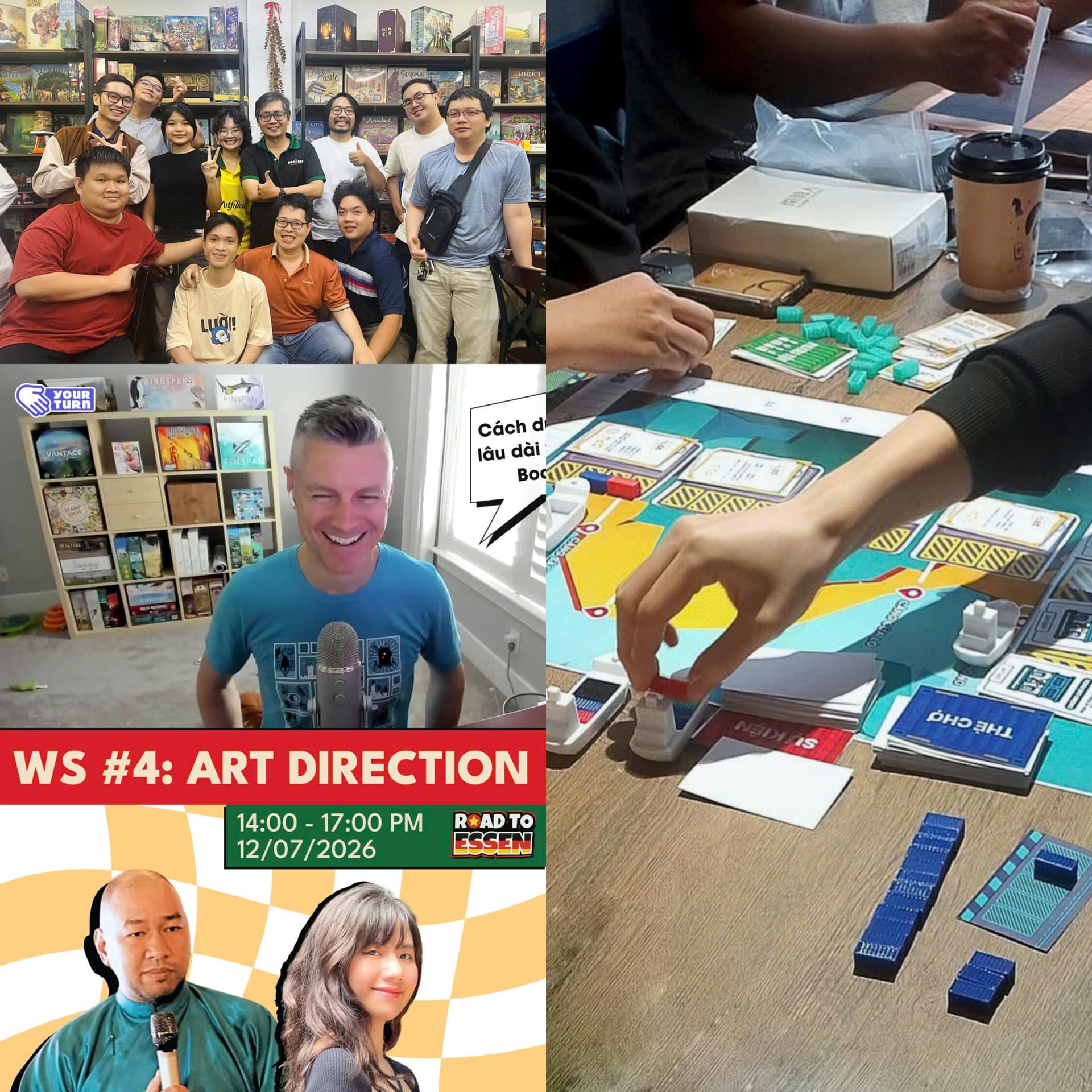
From Playtests and Workshops to the return of YOUR TURN, July marked a new phase for Road to ESSEN Vietnam 2026. Alongside accepting game submissions, the competition continued to expand its community-focused initiatives, creating more opportunities for ideas to be tested, knowledge to be shared, and connections within Vietnam's board game design community to grow.
From a Failed Kickstarter to Wingspan: Jamey Stegmaier Joins Your Turn Season 2
The co-founder of Stonemaier Games sits down with Everjoy Global CEO Ionah Nguyen to talk design principles, the meeting that led to Wingspan, and why customers decide what gets made next.