From a Failed Kickstarter to Wingspan: Jamey Stegmaier Joins Your Turn Season 2
The co-founder of Stonemaier Games sits down with Everjoy Global CEO Ionah Nguyen to talk design principles, the meeting that led to Wingspan, and why customers decide what gets made next.
Some games disappear within a year. Others are still on tables a decade later.
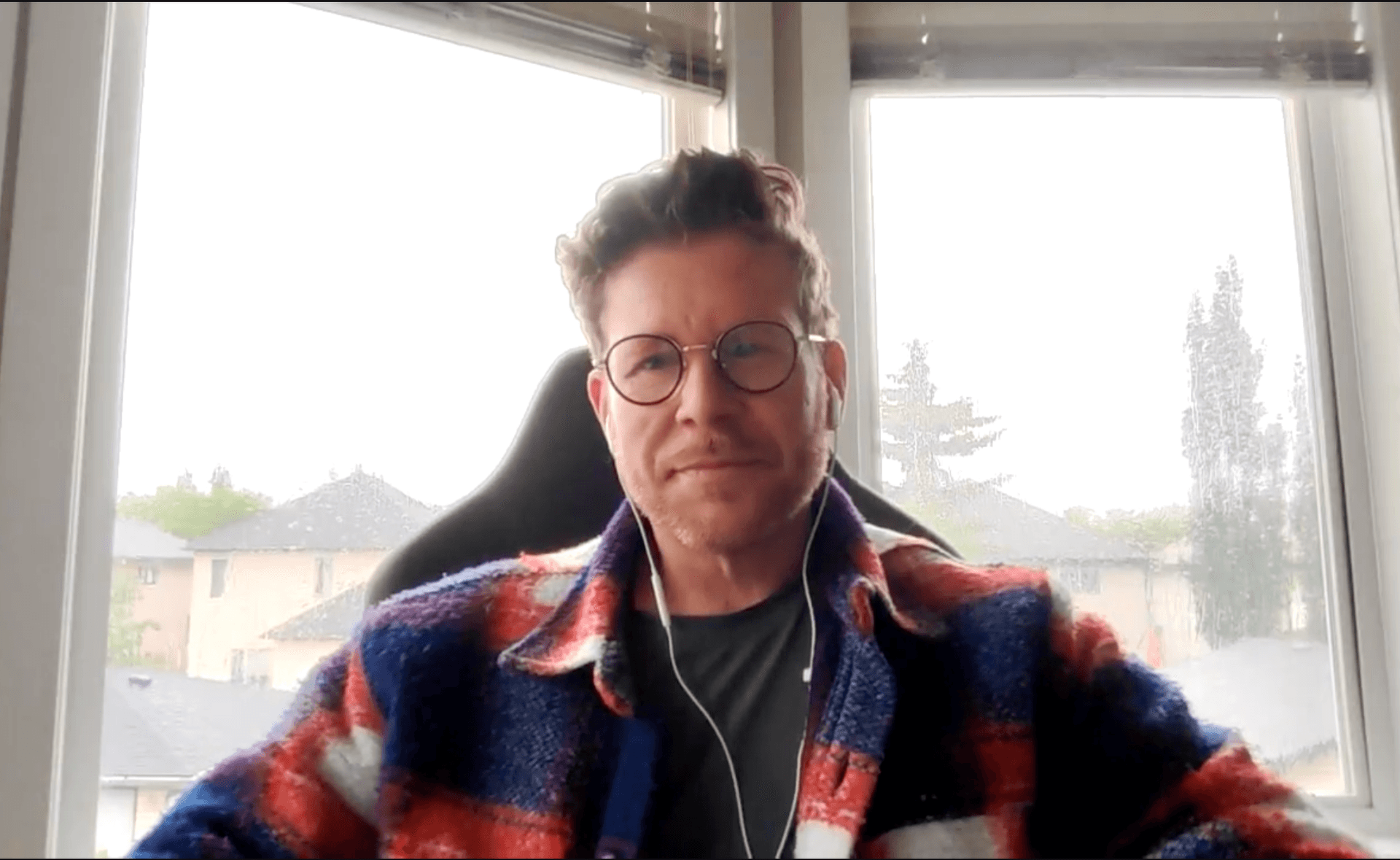
In the newest episode of Your Turn- Everjoy Global's podcast for board game creators- host Ionah Nguyen speaks with Jamey Stegmaier, co-founder and president of Stonemaier Games, about how a lifelong hobby became one of the most respected publishing companies in modern board gaming.
Jamey has designed and published around twenty games over more than thirteen years, including Viticulture, Scythe, and Wingspan. His titles have sold millions of copies, been translated into dozens of languages, and sit consistently among the highest-rated games on BoardGameGeek. He is also known throughout the industry for something rarer than commercial success: a willingness to publish what he has learned, including his mistakes.
It started in St. Louis, with Kickstarter
Jamey grew up designing games for fun. As an adult in St. Louis, Missouri, he watched board games begin appearing on Kickstarter and saw a way to combine two passions, game design and entrepreneurship.
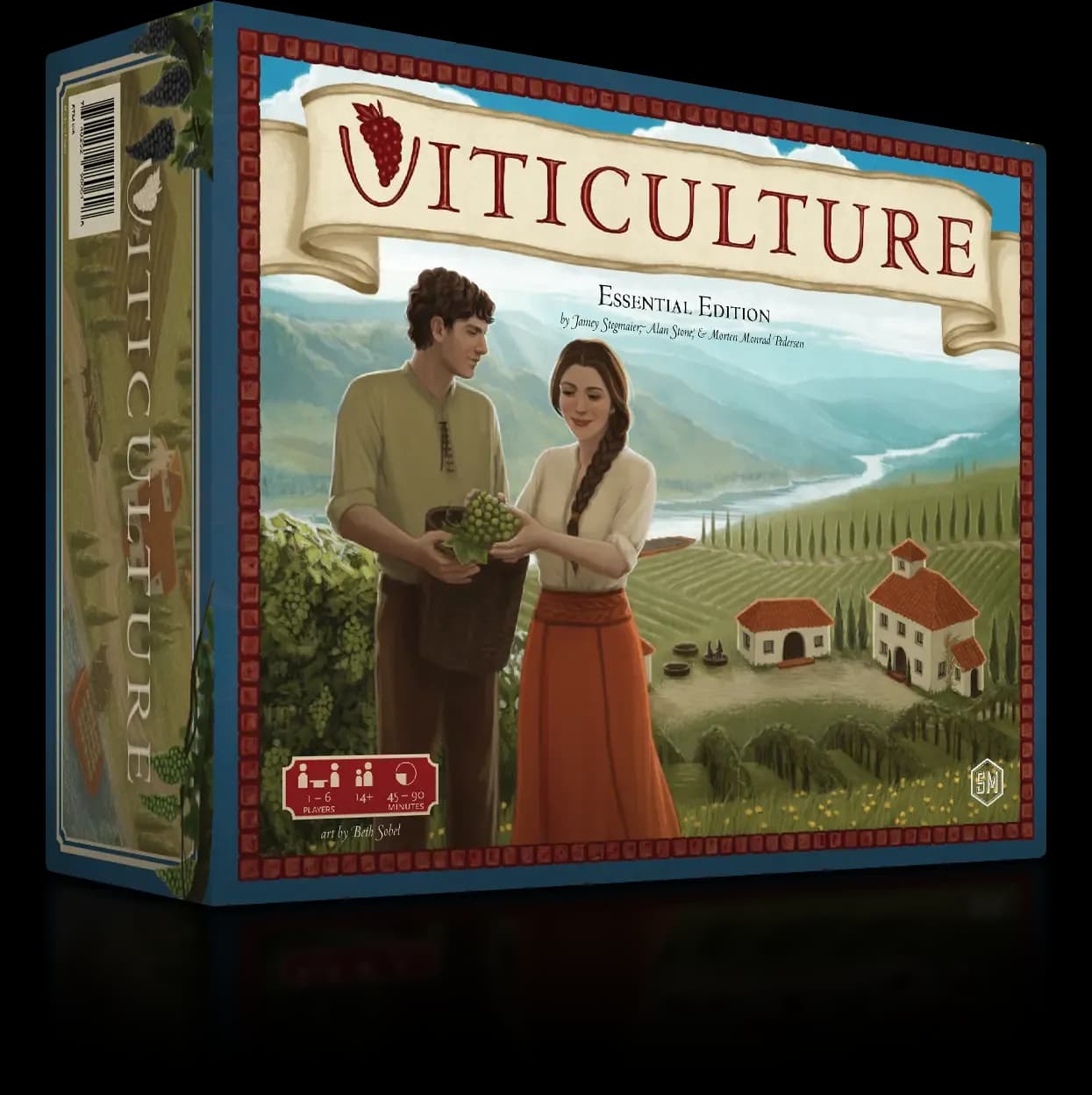
In 2011 he began designing a game called Viticulture. At the time, it was just one game.
Fifteen years later, that single project has become a catalog of roughly twenty titles and a company whose approach to publishing is studied by creators worldwide.
Why Viticulture is still in the top 100
More than a decade after release, Viticulture remains one of the most played and most highly ranked games on BoardGameGeek, in an industry that now produces thousands of new titles every year.
Jamey credits part of it to timing. Both Viticulture and Scythe arrived before the market became as crowded as it is today, which allowed them to reach a critical mass of players.
But he points to something more structural as well. Both games, despite their depth, have an accessible onboarding process and a streamlined action system, complexity emerges from play rather than from the rulebook. It is a pattern he has observed across many long-lived games.
The tenets — and breaking them
In September 2012, around the time of the Viticulture Kickstarter, Jamey published a set of design tenets: the principles underneath the games he wanted to make.
He tells Ionah that designing Viticulture is largely what crystallized them. He had been trying to work out what it was about the games he loved playing, and the games he had made, that mattered to him, and writing it down helped. He was doing the same thing for his business at the same time: defining how he wanted to serve his customers.
He revisits those tenets every couple of years. They have not changed dramatically, but they are not set in stone either.
And he has broken them. One tenet favoured organic game endings, where players themselves determine when a game concludes. During the development of Wingspan, he and Elizabeth Hargrave experimented with exactly that, and ultimately chose a fixed number of rounds instead, because engine-building games give players a clearer sense of timing when they know how long they have. The game, he says, is better for it.
The pitch nobody else took
At Gen Con 2016, a designer named Elizabeth Hargrave pitched a game about birds. Most publishers passed.
Jamey didn't. Speaking almost exactly ten years later, he explains what he saw.
The game needed significant work, at that point it wasn't even an engine builder, just a race to play birds as quickly as possible. But what impressed him was that every single bird card had mechanisms that genuinely fit that specific bird. Elizabeth had done the research, she was passionate about the subject, and she was skilled at turning that knowledge into unique mechanics. Designing large numbers of thematically distinct cards is hard work, and she had done it well.
The second thing had nothing to do with the game. In that short meeting, Jamey could tell Elizabeth would be good to work with, she listened to feedback, but she also pushed back and explained what she had already tried and ruled out. That combination, he says, is exactly what he wants in a design partner.
Wingspan went on to become one of the defining games of the decade.
How Wyrmspan and Finspan happened
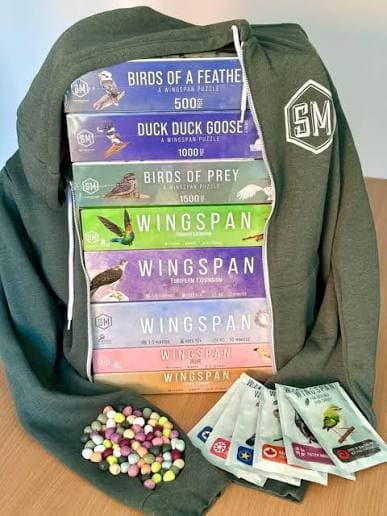
Stonemaier didn't just publish Wingspan. It built a universe around it, Wyrmspan, Finspan, and continental expansions spanning Europe, Oceania, Asia, and South and Central America, with two more continents still to come.
Asked how a publisher decides when to expand, Jamey gives an answer that runs through everything Stonemaier does.
His goal for any initial release is to make the core box as complete as possible, every good, fun, intuitive idea goes in — while acknowledging a game might have a future beyond it. With Wingspan, the team focused on North American birds, but there was an entire world of birds they wanted to include, and Elizabeth began designing the European expansion in the hope that the game would succeed.
Wyrmspan and Finspan came later, and from a different source: players asked for them. Enough people requested the Wingspan system applied to other kinds of animals that Stonemaier decided to try. They landed on dragons for a slightly heavier game and fish for a slightly lighter one.
That, Jamey says, is really the answer for any of their games. If customers clearly want something, Stonemaier will at least give it a try. Serving those customers is the entire reason the company exists.
And the one everyone asks about
Ionah asks what could come next. Dinosaurs and insects are the two most common suggestions, and Jamey doesn't rule them out — but there are still plenty of birds and fish left to cover first.
He does offer one answer that fans will enjoy: if the Pokémon Company ever said yes, Stonemaier would seriously consider a Pokémon version of Wingspan. It's a relationship they have been slowly building for years. So far, the answer has been no.
Watch the full episode
The complete conversation covers Jamey's design tenets, the business philosophy behind Stonemaier, what he believes about publishing today that he would once have disagreed with, and much more.
Your Turn Season 2 explores one theme across every episode: commercializing board games, what it actually takes to turn a game into a sustainable business. This season also features Gavan Brown (CEO of Roxley Games, Brass: Birmingham, Brass: Pittsburgh), Maurice Lynch (formerly of Asmodee Partners, now Head of Boardgame in Cube Golem), and creators from Vietnam and around the world.
Your Turn is hosted by Ionah Hang Nguyen, game designer and CEO of Everjoy Global.
Gallery
Images from the story.
More dispatches
Related news.
dispatchSep 11, 2026
"We Design the Deluxe Edition First": Gavan Brown on Your Turn Season 2
The CEO of Roxley Games - Gavan Brown talks to Everjoy Global CEO Ionah Nguyen about persuading Martin Wallace to hand over Brass, why he refuses to make an expansion for the world's #1 game, and the lesson he learned from a game he destroyed.
From Math Teacher to Two Million Copies: Eric Olsen on Your Turn Season 2
The designer of Flip 7 talks to Everjoy Global CEO Ionah Nguyen about the high school card game that inspired a global hit, why he chose to license instead of self-publish, and why "mass market" shouldn't be a dirty word.
JULY AT ROAD TO ESSEN VIETNAM 2026: When the Competition Goes Beyond Game Submissions
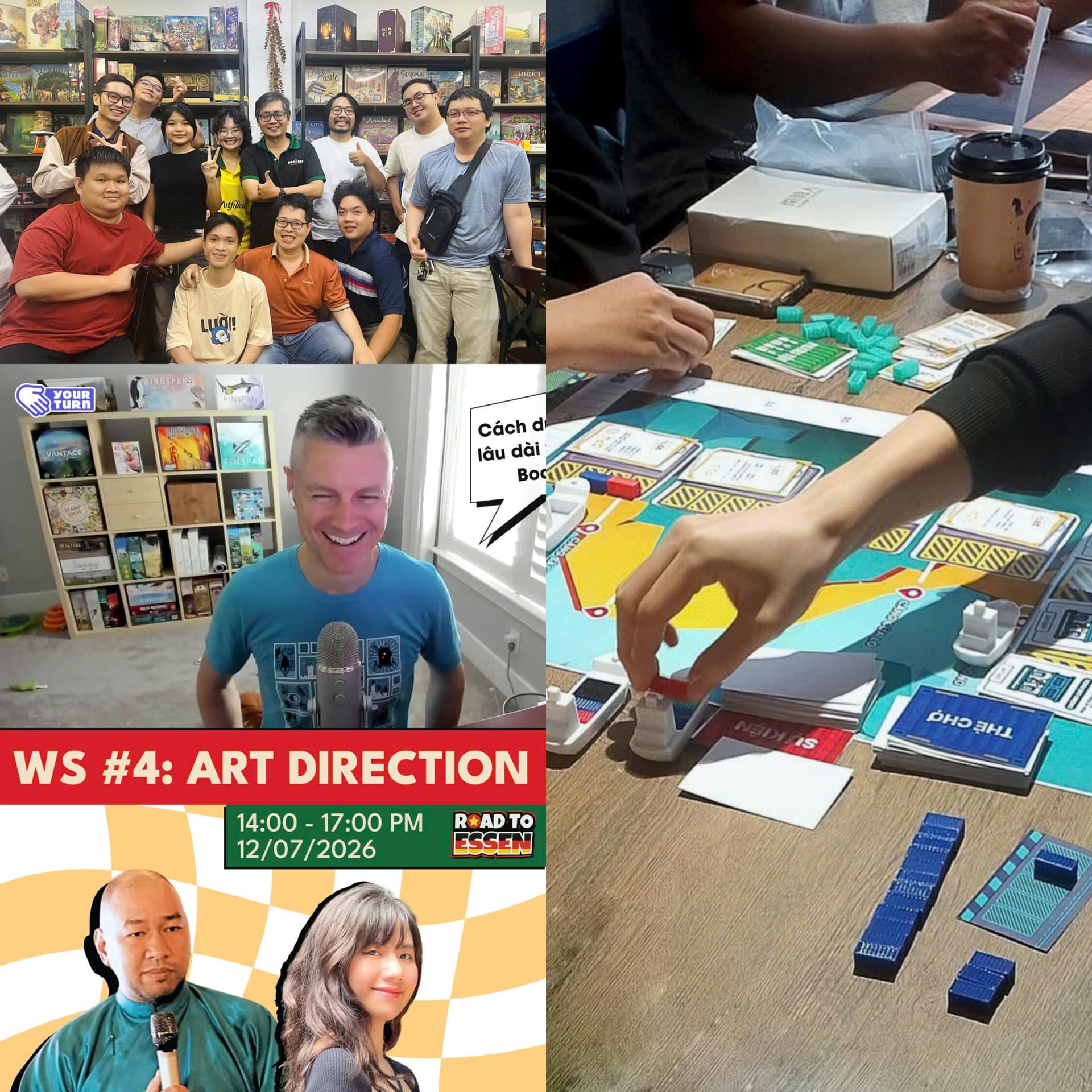
From Playtests and Workshops to the return of YOUR TURN, July marked a new phase for Road to ESSEN Vietnam 2026. Alongside accepting game submissions, the competition continued to expand its community-focused initiatives, creating more opportunities for ideas to be tested, knowledge to be shared, and connections within Vietnam's board game design community to grow.